McCafe: Coffee, Class Signals and No-Nonsense British Culture
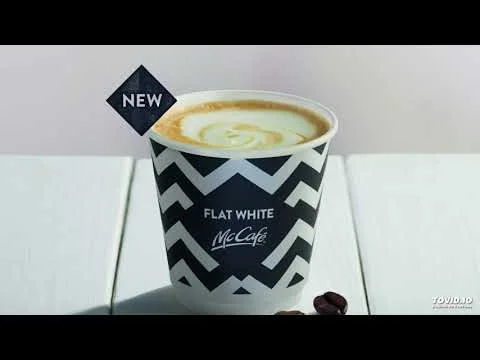
Unlike Australia, where café culture is embedded and familiar, the rise of specialist coffee in the UK introduced new jargon, social codes and implicit class signalling. McDonald’s introducing the flat white to its menu meant entering an already shifting cultural space.
The flat white became less about the drink itself and more about cultural fluency. For many consumers, it represented unnecessary complexity and uncertainty rather than genuine preference.
McDonald’s needed to introduce a flat white to the McCafé menu without patronising customers or assuming knowledge they might not have. For a mass brand, the risk was twofold: alienating people by telling them what to drink, or adopting specialist café language that felt culturally out of step with everyday British life.
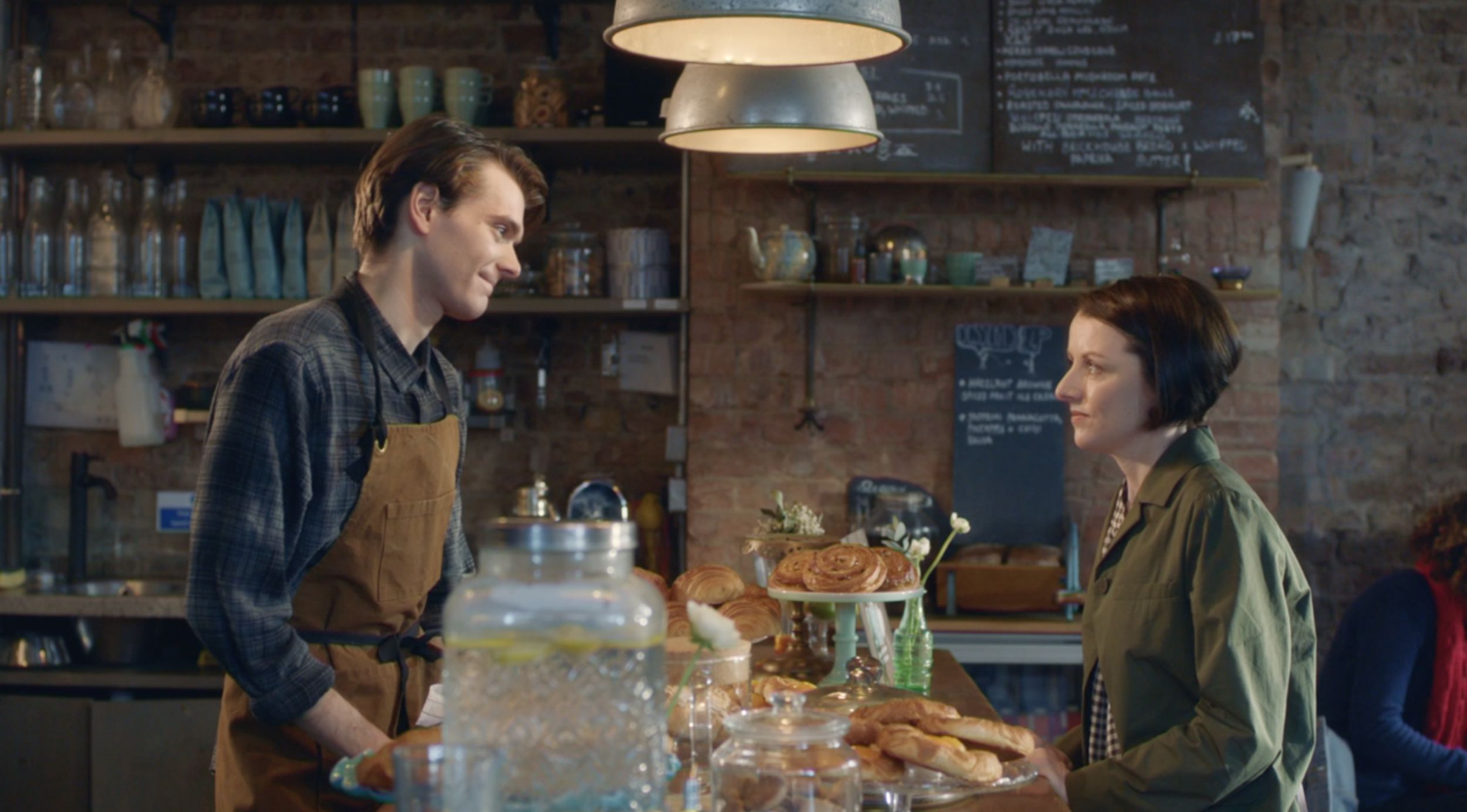
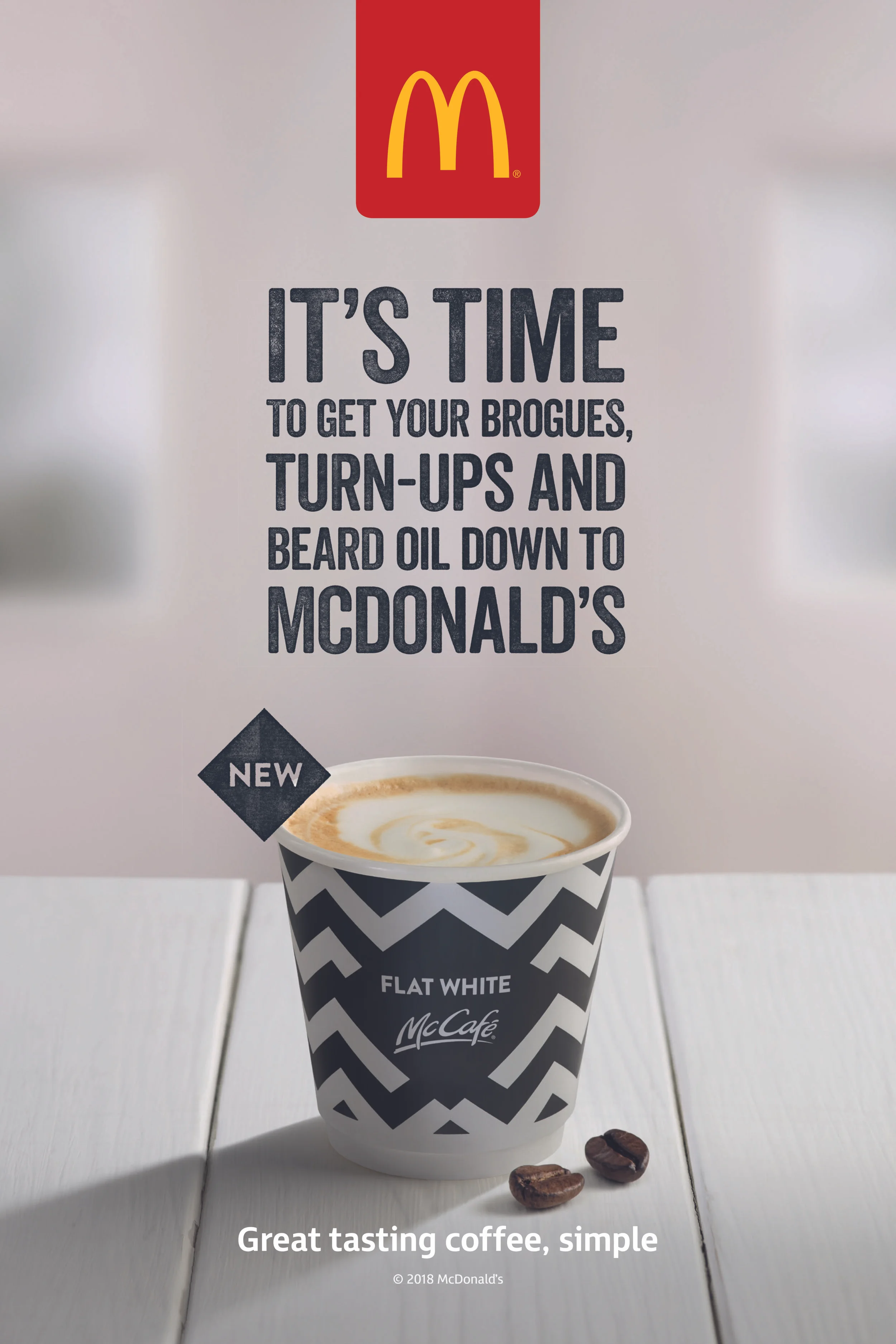
Rather than explaining the flat white, the decision was to reflect the cultural confusion around it. The question everyone wanted to ask was the one the brand asked openly: What is a flat white?
By exposing the performative side of coffee culture and the unnecessary reverence surrounding it, McDonald’s positioned itself alongside everyday consumers. Not as an authority on taste, but as a brand willing to say what people were already thinking.
The work allowed McCafé to enter the coffee conversation without borrowing café culture or mimicking specialist brands, instead poking fun at it. The humour disarmed uncertainty and reinforced McDonald’s down-to-earth relationship with its customers, bringing coffee back to earth rather than elevating it beyond reach.
The campaign was recognised by:
A.P.A. Top 50
FAB Awards
Davie Reviews - Pick of the day
Ads of Brands - Pick of the day
McDonald’s: Weather, National Mood and British Cultural Coding
Weather in Britain operates as a live, collective experience rather than a narrative device. It is watched, tracked, discussed, and shared in real time. It is part of everyday British discourse.
The challenge was not whether to reference the weather, but how to do so without relying on humour clichés or borrowed cultural shorthand.
For a mass brand like McDonald’s, the risk was twofold:
borrowing cultural meaning rather than earning it, something consumers spot instantly;
and feeling presentational rather than genuinely embedded in everyday life.
The work needed to feel truthful, timely, and unmistakably British, while remaining recognisably McDonald’s.
The opportunity was to let McDonald’s participate with the weather, not as a commentator, but as part of the daily ritual of checking what the day holds.
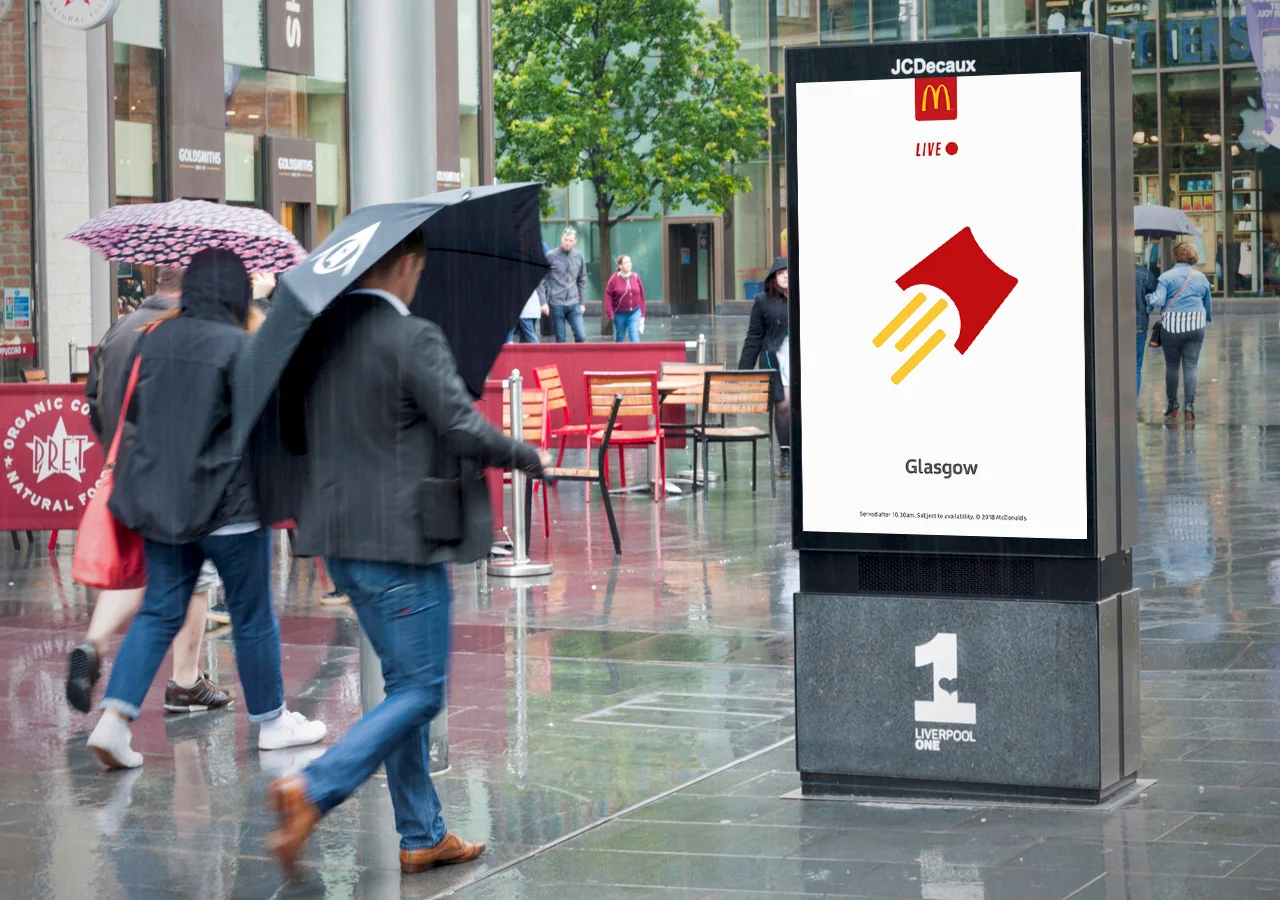
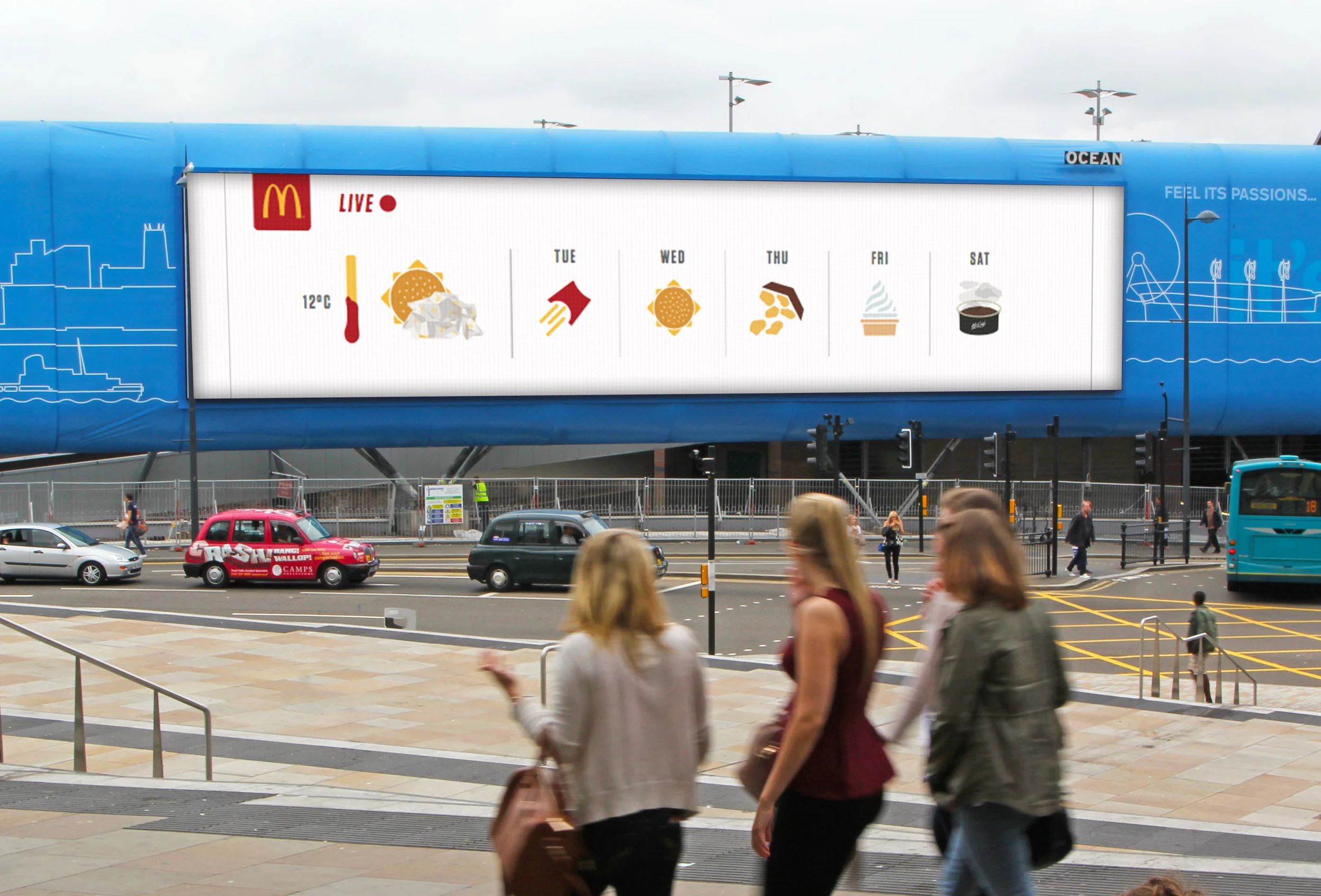
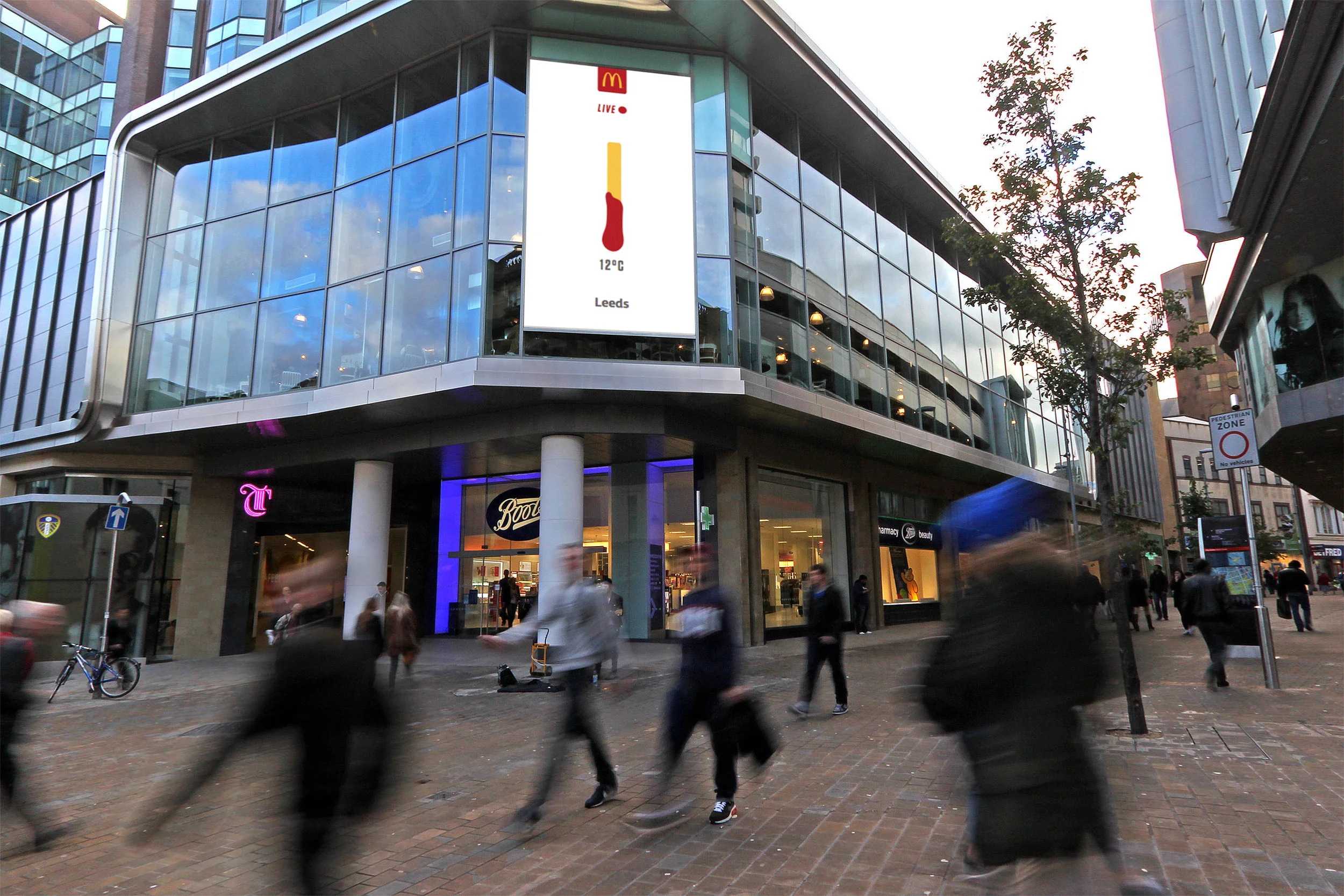
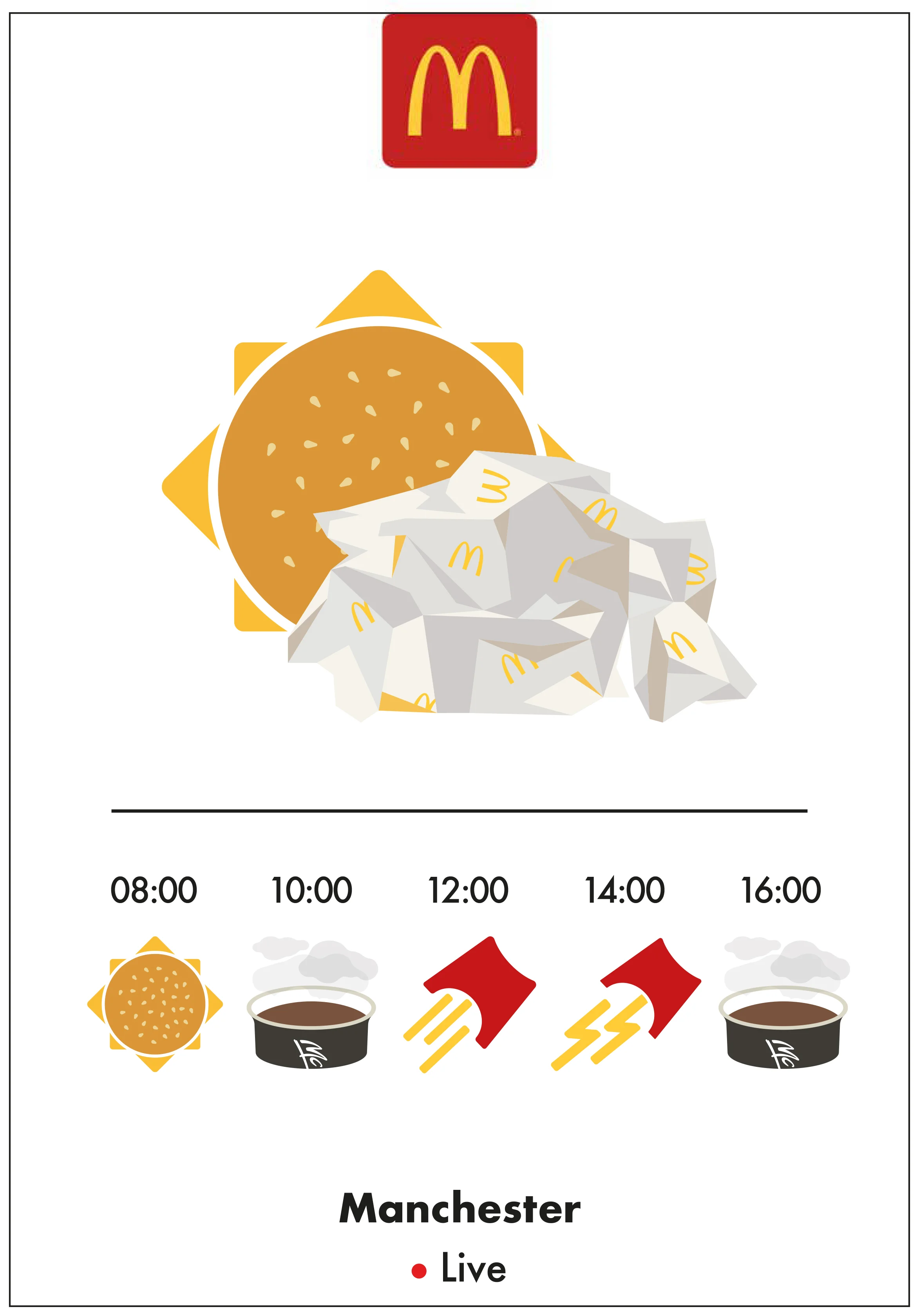
The brand’s own visual language offered a way in. Its symbols were already culturally fluent and widely understood. When matched with live weather conditions, they formed a new visual language that felt immediately recognisable.
By partnering with the Met Office and using real-time data, live forecasts were displayed across major UK cities using McDonald’s icons to represent changing conditions. This allowed the brand to sit inside the national conversation without overstating its presence.
The work positioned McDonald’s as part of the everyday fabric of British life rather than a commentator on it. Following its success in the UK, the idea was adopted by other markets including the United States and India, demonstrating how culturally specific thinking can travel when the underlying insight is sound.
Recognition
Epica Awards, Silver
FAB Awards
Creative Circle, Nominated
Further reading
Creative Review
Lürzer’s Archive
Betfair: Decision-Making, Football Culture and Smarter Betting
Betting culture has long been entangled with laddish humour, bravado and excess, particularly within football. For Betfair, the challenge was to differentiate itself from that category norm without moralising or breaking its connection to the sport.
Rather than framing responsibility as restriction, the opportunity was to reposition it as intelligence. Football already offered a cultural shorthand for this. At the elite level, the game is defined not by recklessness, but by judgement, timing and reading the moment.
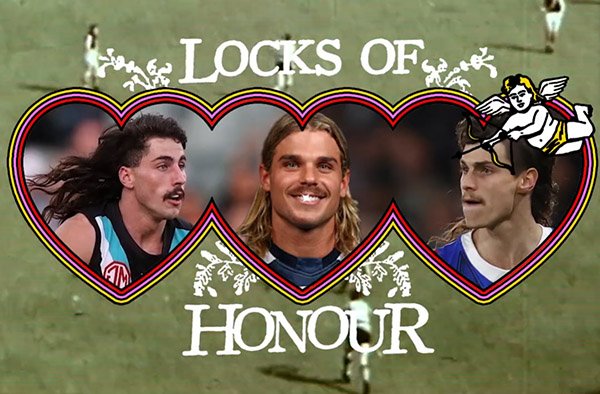
The idea was to take audiences inside the minds of elite footballers, drawing a parallel between decision-making on the pitch and more discerning betting off it. This allowed Betfair to shift tone without abandoning credibility, and to speak about responsibility through admiration rather than instruction.
The work operated across multiple European markets, working with Spanish, Italian and English players and teams. Cultural nuance mattered. Humour, attitude and footballing identity needed to feel local, not translated, while reinforcing a consistent brand position.
The campaign marked a creative shift for Betfair, consolidating a platform built around being a smarter bettor rather than a louder one. It elevated the brand away from laddish betting culture and toward a position grounded in judgement, skill and respect for the game.
McDonald’s: Trust, Labour and Everyday Food
When a brand is embedded in everyday life, trust becomes a core principle rather than a message. For McDonald’s, that trust is built through long-standing relationships with British farmers who produce the food eaten every day across the country.
The challenge was not to make claims about quality or provenance, but to demonstrate them. In a category often criticised for scale and distance, the work needed to show where food actually comes from and who is involved in making it.
Rather than speaking on behalf of producers, McDonald’s put its farmers front and centre. The work showed the hands that grow, raise and prepare the food, connecting people directly to the labour behind it.
By focusing on process rather than promise, the campaign positioned food as something shared rather than abstracted. From our hands to yours became a statement of continuity, emphasising that everyday food is shaped by real people, not systems alone.
The work reinforced McDonald’s role as a brand that understands its place in British life. Not by elevating food beyond reach, but by making transparency and trust part of the everyday.
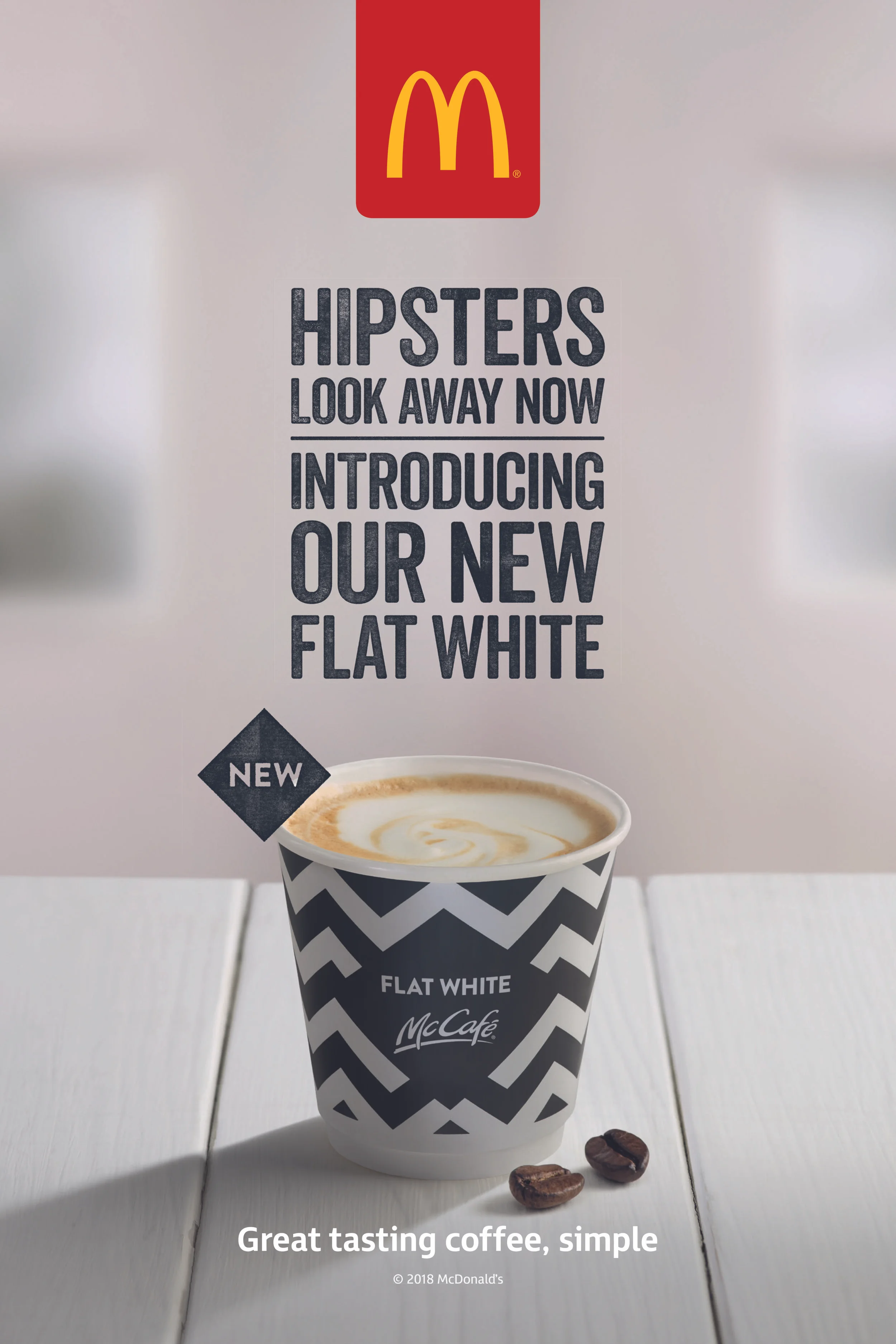
![4781_McD_FlatWhite_6Sht_V2[1].jpg](https://images.squarespace-cdn.com/content/v1/54281c1ae4b0701411ea6d94/1518434609582-ASFW6C5KLL9CZBLNDGQ6/4781_McD_FlatWhite_6Sht_V2%5B1%5D.jpg)
![4781_McD_FlatWhite_6Sht_V1[1].jpg](https://images.squarespace-cdn.com/content/v1/54281c1ae4b0701411ea6d94/1518434610456-19X1PPOOAWVCXWCWXWUZ/4781_McD_FlatWhite_6Sht_V1%5B1%5D.jpg)